AI Writing Tools and Contest Integrity: What Students and Coaches Need to Know
Published · Guide · Writing & Research competitions
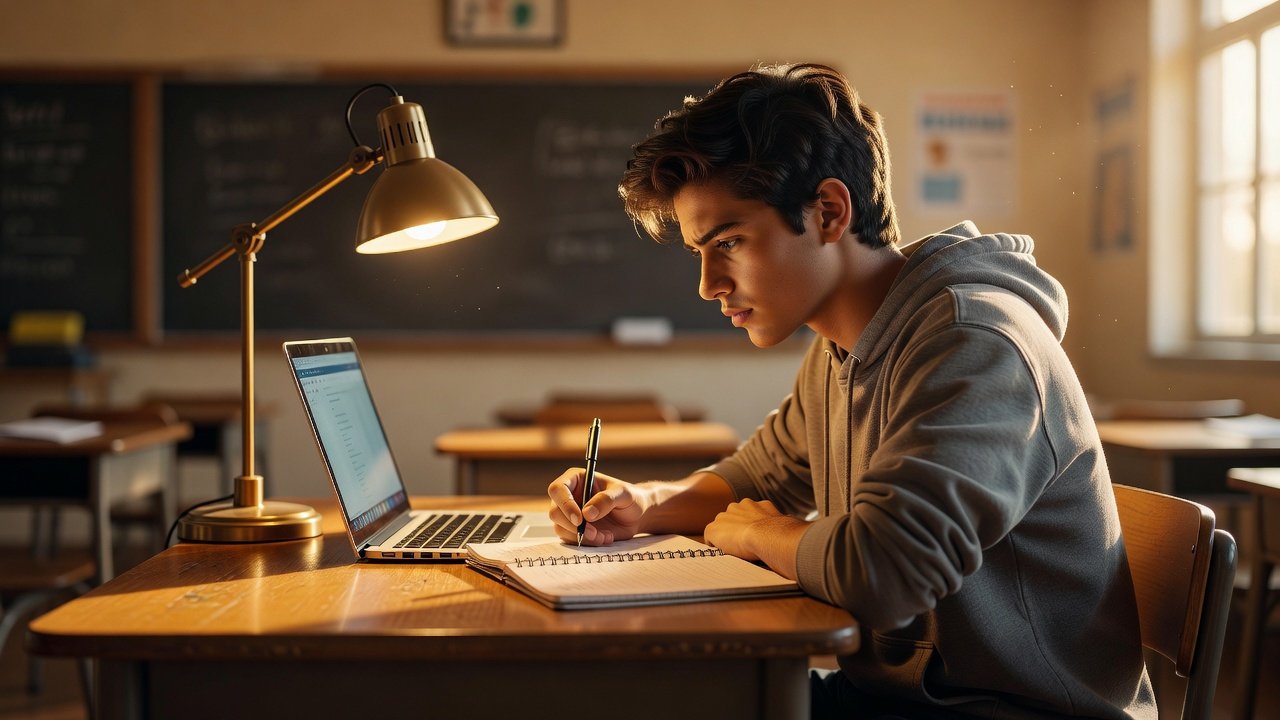
Every major student writing and research contest has now published an explicit policy on AI-generated content. The range is wide: some programs permit AI tools for brainstorming and editing; others treat AI-generated text as a form of plagiarism that triggers disqualification. Students who enter without reading the current rules for their specific contest are taking an unnecessary risk.
This guide covers the AI policies of the competitions most relevant to high school writers and researchers, with the critical distinctions you need to understand before submitting.
The core distinction every policy is drawing
Across programs, the defining line is between using AI as a tool during the creative process and submitting AI-generated text as the student’s own work. The first is increasingly permitted in limited forms; the second is universally prohibited.
What counts as “AI-generated” varies by program. Some use the definition: a work automatically created based on prompts or inputs with minimal human interaction. Others focus on whether the final text or argument is primarily the student’s own intellectual product. Read each contest’s specific language rather than assuming one policy applies everywhere.
Scholastic Art & Writing Awards
For the 2026 awards cycle, the Scholastic Awards opened for entries on October 1, 2025, with updated AI guidance. The policy permits AI technologies to assist in the artistic process — brainstorming or outlining — but prohibits any entered work whose final product is itself AI-generated. The submission process asks entrants to disclose whether and how they used AI tools. Honest disclosure of permissible use does not affect eligibility or judging.
The practical implication: a student who uses an AI chatbot to brainstorm potential angles for a short story, then writes the story themselves, is within policy. A student who prompts an AI to produce a draft and edits it into final form is not. The judges are professional writers; they are familiar with what AI-generated prose sounds like.
National History Day
National History Day competitions evaluate original historical research. The format categories — paper, exhibit, documentary, performance, website — each require the student to develop and defend a historical argument. The 2026 national contest ran at the University of Maryland in June.
NHD’s concern with AI is primarily about the research and argument, not just the prose. A student who uses an AI tool to generate historical claims or to construct their thesis is undermining what the competition is designed to assess: the student’s own ability to evaluate sources, draw conclusions, and defend an interpretation. Coaches should confirm the current-year NHD rules directly from the official NHD website, as rules are published annually.
Regeneron ISEF (science research)
For science research competitions, AI raises questions that go beyond writing. A student who uses an AI system to generate hypotheses, analyze data, or produce research outputs may be submitting work that is not their own experiment. The ISEF judging criteria evaluate the student’s understanding of their own project — a student who cannot explain their methodology during a judge interview is a red flag regardless of how polished their research paper is.
Additionally, ISEF requires that experimental design be documented and approved before data collection begins. Using AI tools as a substitute for the student’s own intellectual process cuts against the fundamental evidentiary standard the competition enforces.
Essay contests with explicit AI prohibitions
Several prominent essay competitions have taken stricter positions:
- David McCullough Essay Prizes (Gilder Lehrman Institute): As of January 2026, the program permits AI as a brainstorming aid roughly equivalent to talking with a teacher or friend, but prohibits borrowing a thesis or source interpretation from AI, even if the student believes they might have developed the same idea. Finalist essays are reviewed for AI use.
- SPJ/JEA High School Essay Contest: Requires each essay to be entirely original and written directly by the student, with minimal guidance from others including teachers. The prohibition on external writing assistance extends to AI tools.
What this means practically for students
The safest approach in any writing or research competition is to produce the complete first draft yourself before reaching for any external tool. Once your voice and argument are established, AI tools — where permitted — can help with grammar checking and proofreading, which is generally analogous to spell-check. The distinguishing question is whether the intellectual content (the argument, the interpretation, the creative choices) originated with you.
For coaches and teachers: your students will ask whether AI use is allowed. The honest answer is that the rules vary by contest and change annually. Send students to the official contest rules page for the current cycle, not to last year’s summary or a guide from a test-prep company. The stakes — disqualification, exclusion from future cycles, damage to a student’s academic record — are real.
Tracking the rules as they evolve
AI policy in student competitions is actively changing. Programs that permitted broad AI use two years ago have tightened rules; programs that prohibited all AI tools are reconsidering whether proofreading assistance counts. Checking official program websites at the start of each competition cycle is the only reliable method. No secondary source, including this one, can be treated as current for longer than a year.
About this guide: Meli Review publishes preparation guides for student contest entrants and the educators who support them. For the first-time entrant overview, see the first-time contest checklist. For reading competition rules carefully, see How to Read Contest Rules.